

Introduction
Transformation isn’t inherently costly, but the way it’s approached often is.
Most organisations don’t overspend because they scale.
They overspend because systems, tools, and costs scale without alignment.
What starts as a step toward efficiency often turns into:
- Higher licensing costs
- Increasing system complexity
- Longer implementation cycles
And eventually:
Transformation feels like a heavy, expensive commitment
But the reality is simpler: It’s not transformation that’s expensive. It’s how it’s done.
The challenge with digital transformation is rarely the intent; it’s the execution. Research from McKinsey & Company highlights that “Seventy per cent of transformations fail. Contributing factors include insufficiently high aspirations, a lack of engagement within the organisation, and insufficient investment in building capabilities across the organisation to sustain the change, among others”
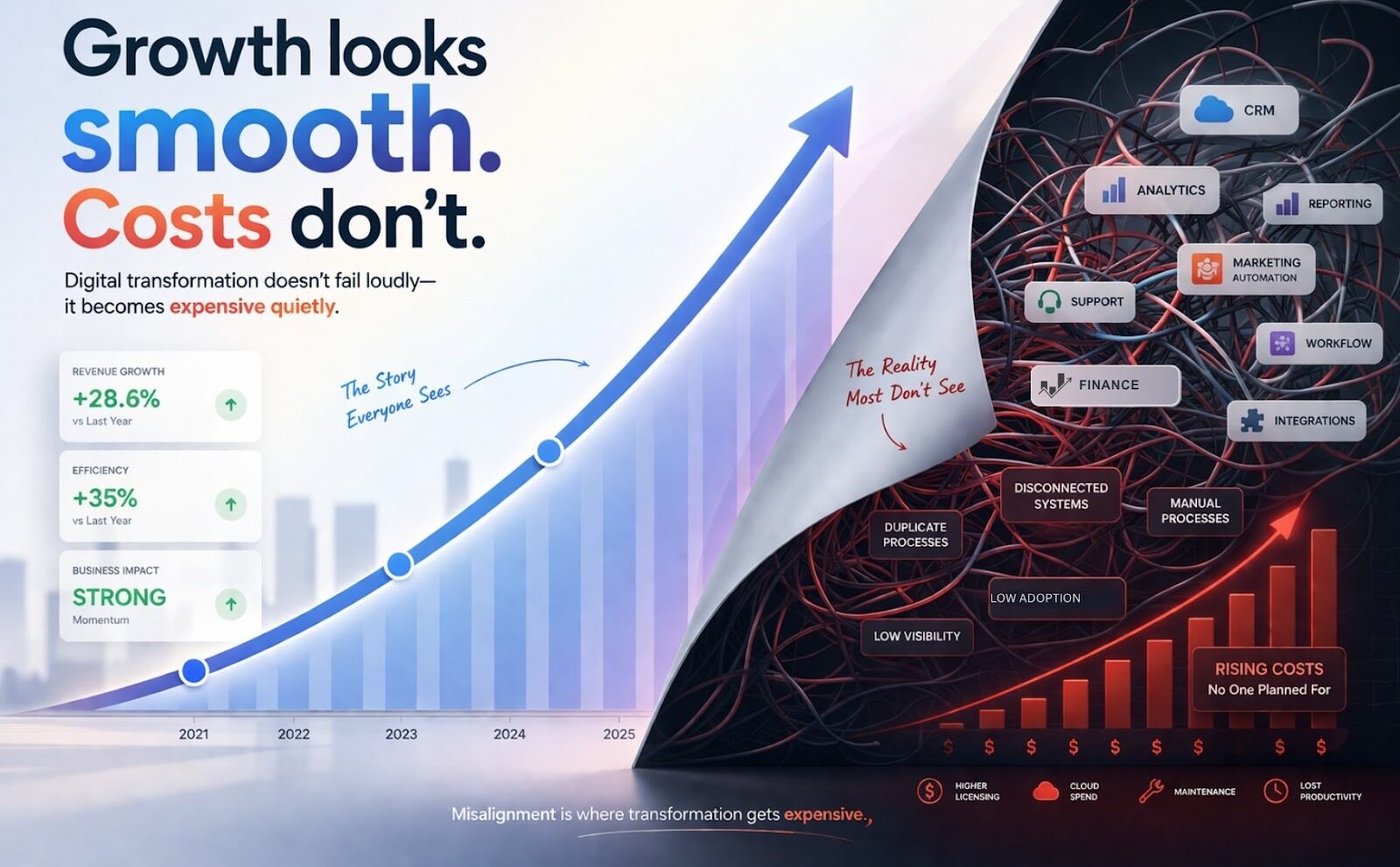
This gap between intention and execution is where costs quietly begin to accumulate. Most organisations don’t make one big, visible mistake; they make a series of smaller decisions that, over time, introduce complexity into their systems. A new tool has been added to solve a specific problem. Another is introduced to improve reporting. Systems are upgraded to support scale. Individually, these decisions are justified. But collectively, they create an environment where tools, data, and workflows are no longer aligned.
As this complexity grows, so does the cost of managing it. Teams begin working across disconnected systems, data flows become fragmented, and manual processes emerge to bridge the gaps. Instead of improving efficiency, technology starts adding layers of effort. What was meant to simplify operations begins to slow them down.
The result is not just higher technology costs, but a broader operational impact. Decision-making slows down due to delayed or inconsistent data. Teams spend more time coordinating across systems instead of executing work. And as inefficiencies compound, the cost of maintaining operations begins to outweigh the value the systems were originally meant to deliver.
This is the underlying pattern seen across many transformation journeys. Costs don’t escalate because organisations invest in technology; they escalate when that investment is not aligned with how the business actually operates.
What should simplify operations often ends up doing the opposite.
Costs don’t spike; they accumulate.
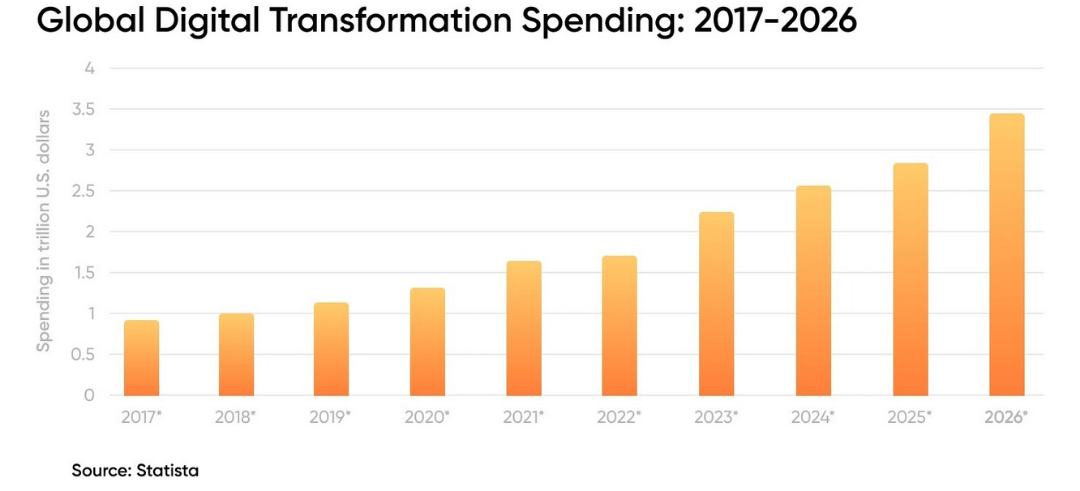
Where the Costs Actually Come From (And How They Quietly Build Up)
Digital transformation rarely feels expensive at the start.
It begins with small, reasonable decisions, adopting a tool, upgrading a system, adding a feature.
Each step makes sense in isolation.
But over time, these decisions compound.
That’s when costs start to rise, not suddenly, but gradually and often unnoticed.
- The “More Tools = More Value” Trap
Transformation often starts with a simple assumption: more tools lead to better operations. Organisations invest in ERP systems, CRMs, reporting tools, and workflow platforms, expecting efficiency gains.
But without alignment, features go unused, adoption remains inconsistent, and systems fail to integrate effectively.

You end up paying for capability, not actual usage. You end up paying for capability, not actual usage. This is where the assumption that more tools lead to better outcomes starts to break down. Without clear alignment, organisations often end up paying for capabilities they don’t fully use. In fact, research reported by SiliconANGLE suggests that approximately 30% of SaaS licenses purchased by companies go unused, representing a significant waste of resources and unnecessary financial burden.
Example: A team adopts a CRM, then adds marketing automation, analytics, and support modules over time.
Each addition increases cost, but not necessarily efficiency.
2. When One Tool Becomes an Ecosystem
Most platforms are designed to grow with you. What starts as a single solution expands into additional modules, add-ons, and higher pricing tiers.
Over time, one tool becomes a full ecosystem. Costs increase with every addition, switching becomes difficult, and flexibility is reduced. This isn’t always intentional, but it’s a common outcome as organisations scale.
3. Cloud Cost Creep: Paying More Without Realising It
Cloud infrastructure offers flexibility, but without structure, it can become expensive.
Costs build up through:
- Idle resources that continue running
- Storage that keeps growing without cleanup
- Data transfer and processing charges
Since pricing is based on:
- Usage
- Storage
- Compute
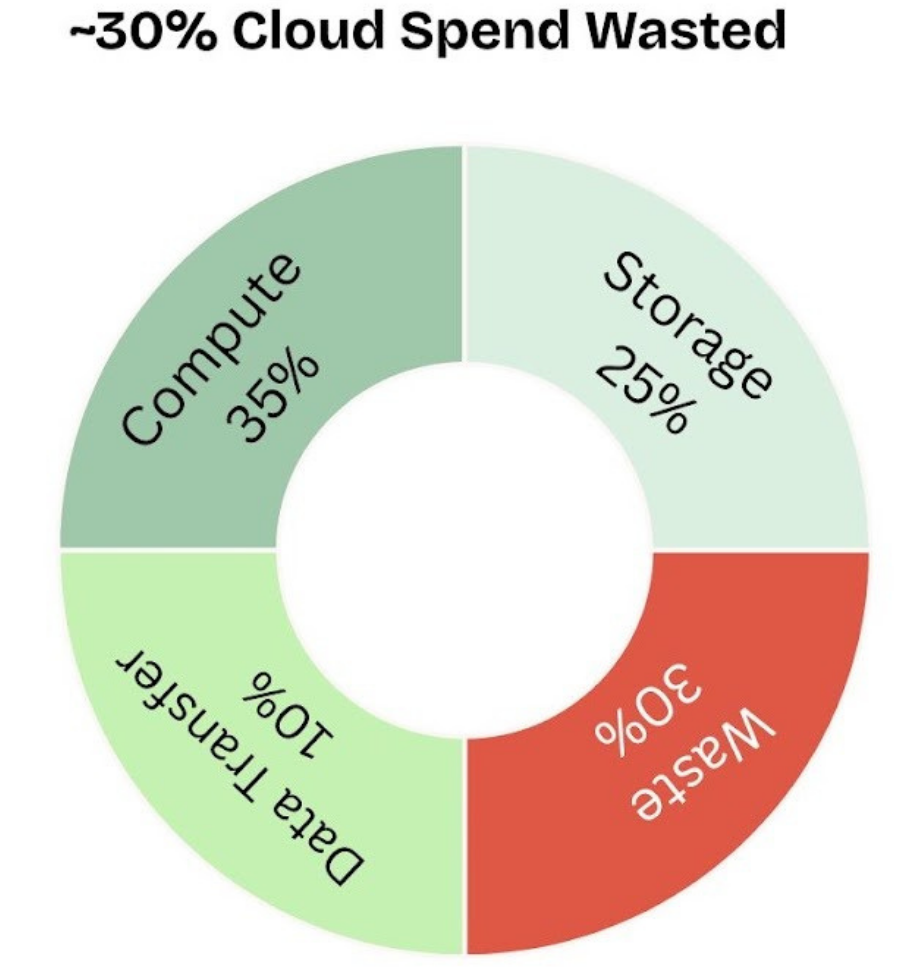
Costs scale automatically, even when the value doesn’t. Cloud infrastructure offers flexibility, but without active cost management, it can quickly become expensive. According to Flexera’s 2025 State of the Cloud Report, organisations waste an estimated 30% of their cloud spend due to idle resources and a lack of optimisation. At the same time, 84% of organisations identify managing cloud costs as their top challenge, highlighting how easily costs can scale without corresponding value.
Example: An organisation upgrades its storage plan, anticipating growth, but unused files accumulate over time.
4. Paying for Capacity You Don’t Fully Use
Many systems are priced for scale. Organisations often upgrade plans or increase capacity in anticipation of future needs, but actual usage rarely matches that level.
Example: A company increases user licenses as teams grow.
But many users only use basic features.
Licensing costs rise, but productivity doesn’t at the same rate.
5. Costs That Scale Faster Than Value
As businesses grow, more data is generated, more users are added, and more workflows are created. Most systems are designed to scale pricing alongside this growth.
The result is a widening gap where costs increase steadily, but efficiency and value lag behind.
6. Adding Tools Instead of Connecting Them
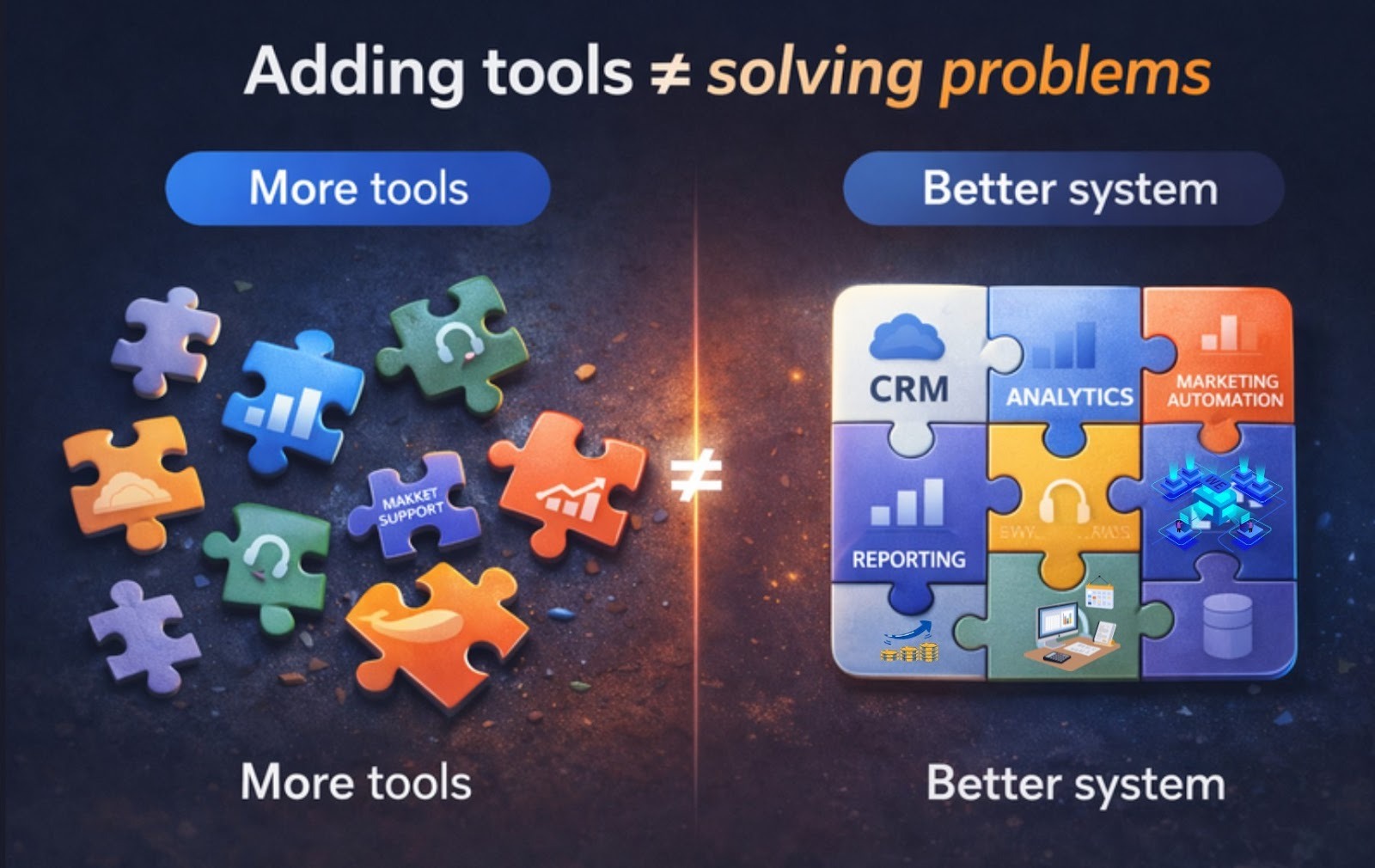
When systems don’t work together, the default response is often: “Let’s add another tool”
Instead of: “Let’s fix how these systems interact”
This leads to:
- Multiple tools solving overlapping problems
- Increased subscription costs
- More complexity for teams
Example:
- One tool for reporting
- Another for dashboards
- Another for data extraction
Instead of a connected system, you end up with:
A fragmented stack that’s harder and more expensive to manage
This is what most ‘tool-first’ transformations actually look like in practice.
7. Over-Engineering Too Early
Not every organisation needs enterprise-grade systems. Yet many adopt complex architectures and high-end tools before they are necessary.
This results in low adoption, high maintenance overhead, and underutilised systems.
Complexity becomes a cost centre instead of an advantage.
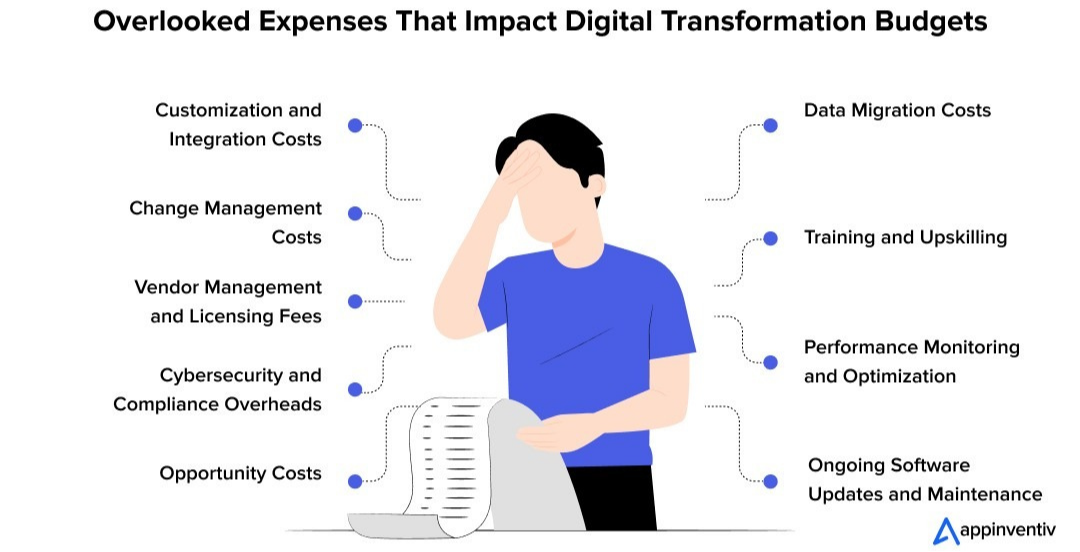
8. The Hidden Cost of Inefficiency
The highest costs are often invisible.
They don’t show up as invoices, but they impact operations every day.
- Manual processes consume hours
- Teams exporting and cleaning data
- Delayed reporting slows decisions
- Constant coordination across disconnected systems
Example:
A team spends hours every week:
- Exporting data
- Cleaning it
- Creating reports manually
There’s no direct “cost line item” for this.
But over time:
👉 It slows down decision-making
👉 Reduces productivity
👉 Increases operational overhead
The cost is already there, you’re just not tracking it
The Pattern Behind All of This
Across all these scenarios, one thing remains consistent:
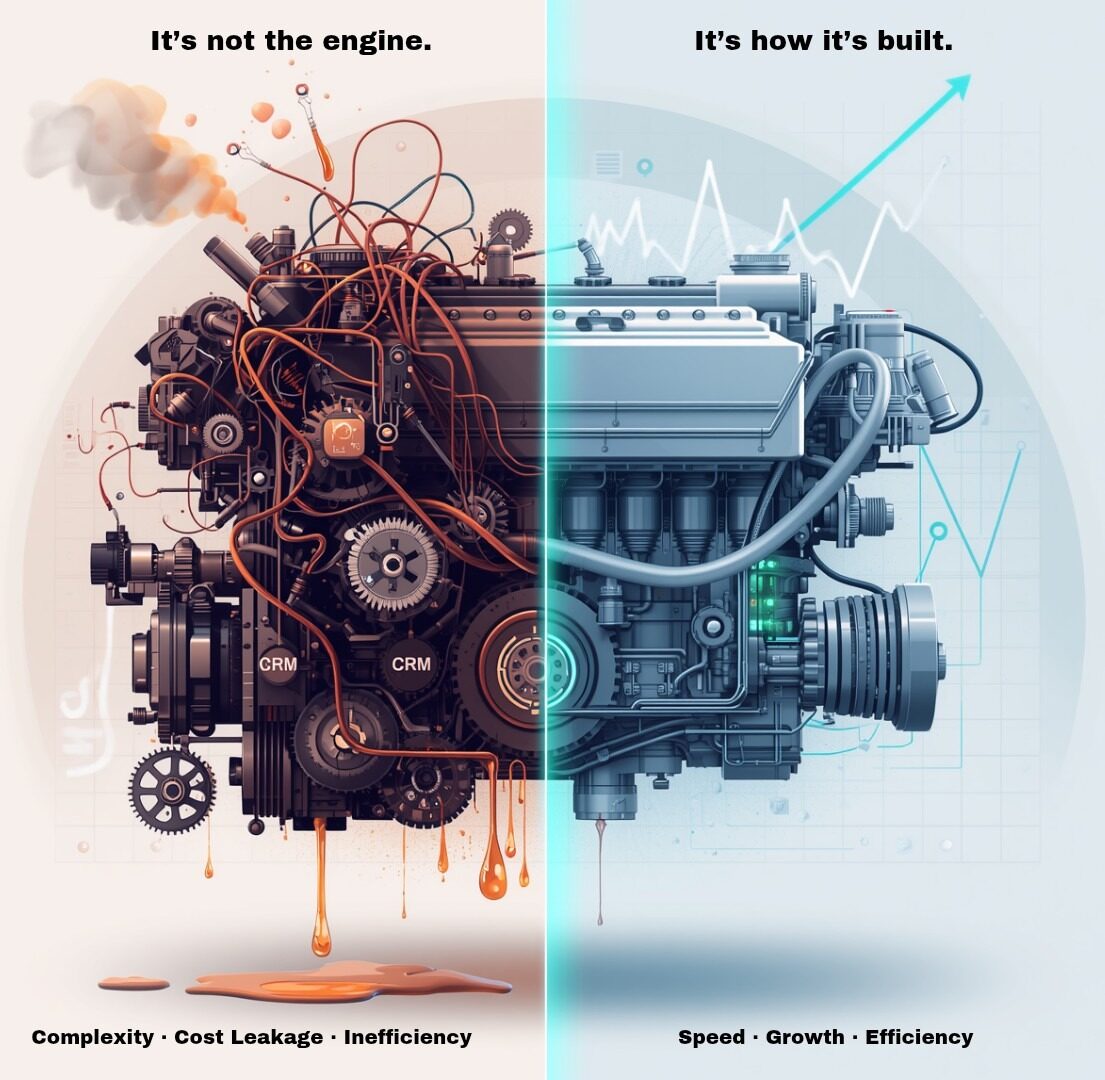
Costs increase when systems grow without structure. Not because of a single bad decision, but because growth happens without alignment.
A Smarter, More Cost-Conscious Approach to Transformation
Reducing cost doesn’t mean doing less. It means doing the right things, at the right time, in the right way.
- Start With the Problem, Not the Platform
Before investing in tools:
- Identify where operations are breaking
- Understand what’s causing delays
- Solve the bottleneck, not just the system
Digital transformation is often framed as a technology problem, but in reality, it’s an operating model and capability challenge. As highlighted by Harvard Business Review, transformation is less about the tools you adopt and more about how your organisation works, how teams collaborate, how decisions are made, and how processes are structured. Without the right capabilities, alignment, and ownership, even the best tools fail to deliver value.
2. Build on What You Already Have
Most organisations don’t need to replace everything. They need to connect systems, structure workflows, and improve data flow. Integration is often more effective and more cost-efficient than replacement. This is where a structured, integration-first approach becomes critical, focusing on alignment before expansion.
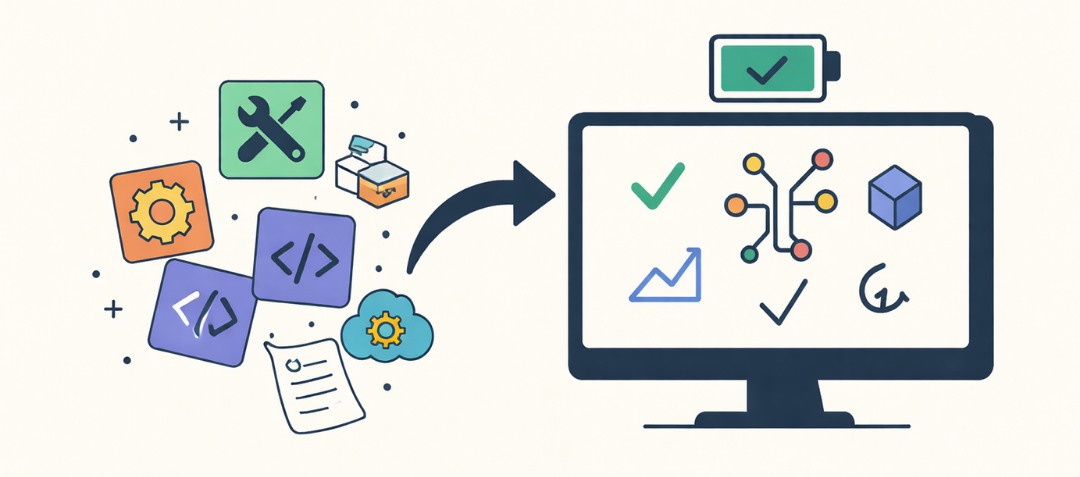
3. Use Best-of-Breed Open Solutions
Instead of locking into a single ecosystem:
- Use flexible, modular tools
- Choose solutions based on need
Benefits:
- Lower cost
- Greater flexibility
- Reduced vendor dependency
You stay in control of your architecture
4. Align Solutions to Your Stage of Growth
What works for a large enterprise won’t work for an early-stage company.
- Early stage: Focus on structure and workflows
- Mid stage: Focus on integration and visibility
- Scaling stage: Focus on performance and optimisation
Transformation works best when it matches your stage, not industry trends.
5. Focus on Measurable Impact
Every transformation effort should improve:
- Manual effort
- Speed of execution
- Access to insights
- Coordination across teams
If operations aren’t improving, the approach needs to change
Traditional Approach vs Smarter Approach
Traditional Approach | Smarter Approach |
Replace systems entirely | Improve existing systems |
Buy bundled platforms | Use modular, best-of-breed tools |
Pay for full capacity | Scale based on actual need |
Locked into vendor ecosystems | Flexible, open architecture |
High upfront investment | Incremental, cost-controlled approach |
What This Looks Like in Practice
Example 1: SME with Manual Operations
Before: Managing operations through spreadsheets and messaging, with no structured workflows and high manual effort.
After: Introduced workflow automation, centralised task tracking, and enabled visibility across operations.
Impact: Reduced manual effort, improved coordination, and avoided heavy ERP investment.
Example 2: Mid-Sized Organisation with Multiple Tools
Before: Separate systems for CRM, operations, and reporting with delayed insights.
After: Integrated systems, consolidated data, and built real-time dashboards.
Impact: Faster access to insights, better decision-making, and reduced operational delays.
Transformation Doesn’t Have to Be Expensive
It becomes expensive when:
- Tools are added without a strategy
- Systems scale without alignment
- Complexity increases without control
The goal isn’t to spend more. It’s to make what you already have work better.
Do You Really Need More Tools Or A Smarter System?
You don’t need to follow the same path that leads to overbuilt systems and rising costs.
You need:
- Better integration
- Clearer workflows
- Greater visibility
Take a Smarter Approach
If your operations feel slower, harder to manage, or more expensive as you grow, it may not be a scaling problem.
It may be an alignment problem.
👉 Explore how you can simplify your transformation
Cost Leak Audit Checklist
Where Are You Losing Money in Your Current Systems?
Most organizations don’t overspend in one place.
They lose money across multiple small inefficiencies.
Use this checklist to identify where costs may be quietly adding up.
1. Tools & Subscriptions
- Are you paying for tools with features your team rarely uses?
- Have you added multiple tools solving similar problems?
- Are different teams using different tools for the same function?
- Do you have subscriptions that no one actively monitors?
Cost Leak Signal: Paying for capability instead of actual usage.
2. System Integration & Data Flow
- Do your systems require manual data transfer between them?
- Are teams exporting and re-uploading data across tools?
- Is the same data stored in multiple systems?
- Do reports require consolidation from different platforms?
Cost Leak Signal: Time + effort lost due to disconnected systems.
3. Cloud & Infrastructure Usage
- Are you paying for storage that isn’t actively used?
- Do you have idle or underutilised cloud resources running?
- Are costs increasing without clear visibility into why?
- Do you lack alerts or controls for usage spikes?
Cost Leak Signal: Costs are scaling automatically without optimisation.
4. Manual Processes & Workflows
- Are repetitive tasks still handled manually?
- Do teams rely on spreadsheets for tracking operations?
- Is task coordination dependent on messages or emails?
- Are workflows inconsistent across teams?
Cost Leak Signal: High operational effort for routine tasks.
5. Reporting & Decision-Making
- Do reports take significant time to prepare?
- Are decisions delayed due to a lack of real-time data?
- Do teams rely on outdated or inconsistent data?
- Is there no single source of truth?
Cost Leak Signal: Slow decisions = missed opportunities.
6. Scaling & Licensing
- Are licensing costs increasing as teams grow?
- Are all users fully utilising the tools they have access to?
- Have you upgraded plans “just in case” rather than based on need?
- Do costs rise faster than operational efficiency?
Cost Leak Signal: Scaling cost > scaling value.
7. Process & Workflow Visibility
- Do you lack visibility into task progress across teams?
- Are delays only discovered after they impact outcomes?
- Is there no structured way to track workflows?
Cost Leak Signal: Inefficiency hidden inside operations.
Your Results: What Does This Mean?
👉 0–5 checks:
Your systems are relatively aligned, but there’s still room to optimise
👉 6–12 checks:
You likely have moderate cost leakage affecting efficiency and scalability
👉 12+ checks:
Your systems may be driving cost instead of reducing it
What to Do Next
If you checked multiple boxes, the issue isn’t: Lack of tools
It’s: Lack of alignment between systems, workflows, and data
If costs are increasing as you scale, it’s already happening. The question is, how long before it starts impacting decisions and growth? Please get in touch with us at analytics@axxonet.net or visit analytics.axxonet.com
Frequently Asked Questions
Digital transformation feels expensive when systems, tools, and processes scale without alignment. Costs don’t usually come from one large investment; they build up gradually through unused tools, inefficient workflows, and disconnected systems.
No. Transformation itself isn’t inherently costly. It becomes expensive when organisations adopt tools without a clear strategy, overbuild too early, or fail to align systems with actual business needs.
The highest hidden costs include unused software licenses, idle cloud resources, manual processes, delayed decision-making, and time spent coordinating across disconnected systems.
It’s the assumption that adding more software will improve operations. In reality, without proper integration and alignment, more tools often increase complexity, cost, and inefficiency.
Cloud costs scale automatically with usage, storage, processing, and data transfer. Without active monitoring and optimization, unused resources and growing data can significantly increase costs over time.
A smarter approach focuses on solving real operational problems, integrating systems, aligning tools with business needs, and scaling gradually based on actual usage, not assumptions.
They are critical. Transformation is not just about technology, it’s about how work gets done. Structured workflows and clear processes drive real efficiency and value.
Only when the organisation has reached a stage where complexity, scale, and operational needs justify it. Adopting advanced systems too early often leads to underutilization and higher costs.
Look for unused tools, overlapping systems, manual workarounds, and rising costs without improved efficiency. A structured cost audit across tools, workflows, and data flow helps identify where money is being lost.
Start by identifying where inefficiencies exist, unused tools, manual workflows, and disconnected systems. You don’t need to fix everything at once. Focus on the biggest operational bottlenecks first.
No. Most cost reductions come from optimising what you already have, not adding new tools. In many cases, better integration and workflow structuring reduce costs without major investment.
Not if done correctly. A structured, incremental approach allows you to improve systems gradually without disrupting day-to-day operations.
Costs will continue to increase as your business grows. Over time, inefficiencies slow down decisions, reduce productivity, and make scaling more expensive than it needs to be.