

One Platform. Security, Compliance, Data and AI Aligned.

Platform Engineering, DevSecOps, DataOps & Quality Assurance Services

Build an Engineering Platform That Enables Growth, Not Complexity.

Your request

Fill Your Requirements

1 / 5

So we know who we’re speaking with.

press Enter

Your details stay private. No spam, ever.

  • DevSecOps
  • Quality Assurance
  • Observability
  • DataOps
  • AI Infrastructure
  • Platform Ops
  • Business Continuity
  • Compliance Automation
  • DevSecOps
  • Quality Assurance
  • Observability
  • DataOps
  • AI Infrastructure
  • Platform Ops
  • Business Continuity
  • Compliance Automation

Axxonet helps organisations establish a modern platform engineering foundation that aligns technology operations with business growth.

Modern organisations face increasing pressure to deliver software faster, strengthen security, support compliance initiatives, improve operational visibility, and adopt AI capabilities without introducing unnecessary complexity.

As businesses grow, technology ecosystems often become fragmented across DevOps, security, observability, compliance, analytics, automation, and AI initiatives. The result is slower delivery, rising operational overhead, duplicated tooling, increased risk, and escalating costs.

By combining Platform Engineering, DevSecOps, DataOps, Quality Engineering, Compliance Automation, AI Infrastructure, and Operational Resilience, we help leadership teams improve delivery performance, strengthen governance, and create scalable technology platforms designed for sustainable growth.

Executive Outcomes

  1. Accelerate software delivery without compromising security

  2. Improve visibility across applications, infrastructure, cloud services, and business-critical systems

  3. Strengthen compliance readiness for SOC 2, ISO 27001, GDPR, HIPAA, and customer-driven security requirements

  4. Reduce operational complexity and vendor dependency

  5. Improve platform reliability, resilience, and disaster recovery preparedness

  6. Establish secure, scalable foundations for AI and digital transformation initiatives

Why Axxonet

Why Organisations Choose Axxonet

Unified Platform Engineering

Rather than managing security, observability, compliance, data operations, automation, and AI initiatives in isolation, we help organizations establish a unified platform engineering strategy that aligns technology investments with business objectives.


Open-Source-First Without Operational Risk

We help organizations leverage enterprise-grade open-source technologies to reduce vendor lock-in, improve architectural flexibility, and optimize long-term operating costs while maintaining enterprise governance and support standards.

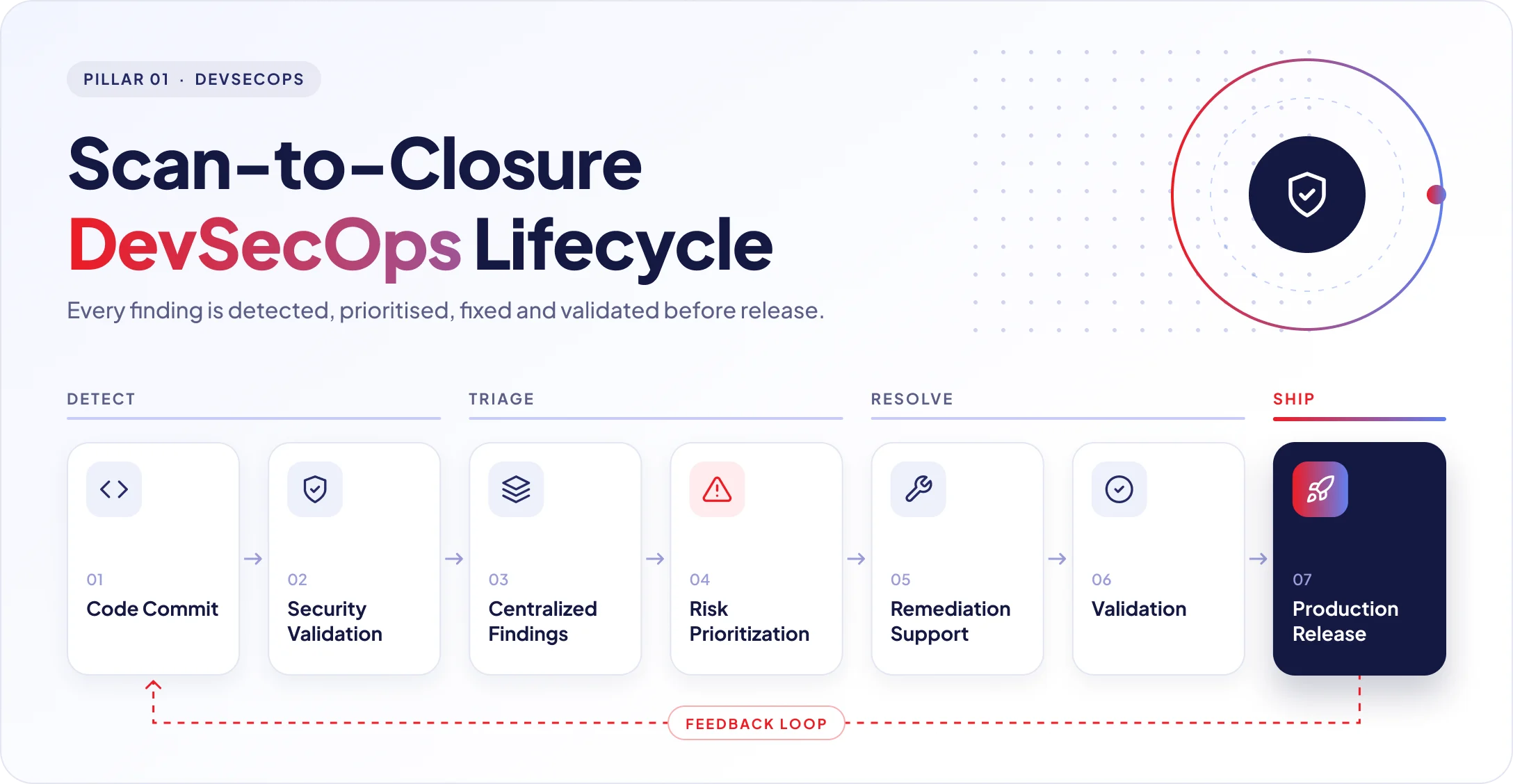
Scan-to-Closure DevSecOps

Our DevSecOps approach goes beyond vulnerability reporting. We help organizations identify, prioritize, track, and remediate security findings through structured engineering workflows that accelerate vulnerability closure.

Continuous Compliance & Governance

We establish repeatable governance processes supported by automated evidence collection, control management, security monitoring, and risk management workflows that reduce compliance overhead while improving audit readiness.

AI-Ready Platform Foundations

We help organizations build secure foundations for AI adoption through LLM observability, governance controls, private AI infrastructure, and secure Model Context Protocol (MCP) integrations.

Schedule a Platform Discovery Session

Evaluate your platform maturity, identify operational risks, and establish a roadmap for secure, scalable growth.

The Executive Challenge

Technology Platforms Should Accelerate Business Growth

Most growing organizations do not struggle because they lack tools.

They struggle because critical capabilities remain disconnected.

  1. 01 Engineering teams operate one platform.
  2. 02 Security teams operate another.
  3. 03 Compliance initiatives rely on spreadsheets and manual evidence collection.
  4. 04 Data platforms evolve independently.
  5. 05 AI initiatives emerge without governance, observability, or security controls.

The challenge is not technology adoption.

The challenge is technology alignment.

Axxonet helps organizations establish a unified operational architecture where delivery, security, observability, compliance, analytics, resilience, and AI initiatives operate as a coordinated platform rather than isolated projects.

1.

DevSecOps & Security Engineering

Integrate security throughout the software delivery lifecycle and transform security from a reporting exercise into a measurable operational capability.

Business Impact

  • Reduced security exposure
  • Faster vulnerability remediation
  • Improved release confidence
  • Stronger customer trust
  • Better governance of software delivery

Key Capabilities

  • Application security testing
  • Dependency security analysis
  • Secret detection and management
  • Infrastructure-as-Code validation
  • Vulnerability prioritization
  • Security remediation workflows
  • Security controls within CI/CD pipelines
  • Continuous software supply chain protection
DevSecOps & Security Engineering diagram
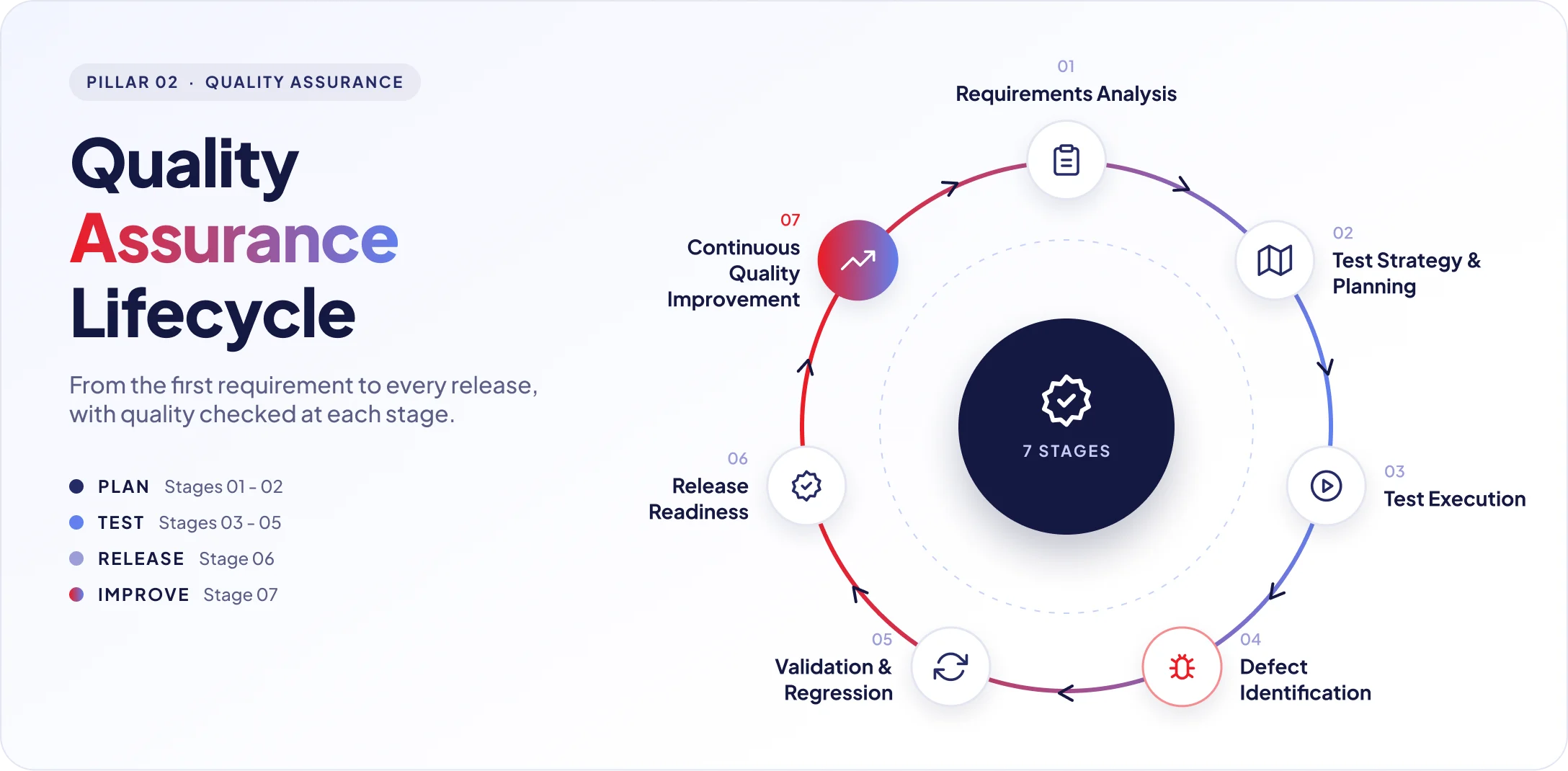
2.

Quality Assurance

Establish structured quality assurance practices that improve software reliability, application performance, release confidence, and customer experience.

Frameworks & Practices Supported

  • Functional Testing
  • Automation Testing
  • Performance & Load Testing
  • Security Testing
  • API & Integration Testing
  • Regression Testing
  • Continuous Testing (CI/CD)
  • Test-Driven Development (TDD)

Business Impact

  • Improved software reliability
  • Faster and more confident releases
  • Reduced production defects
  • Lower testing and maintenance costs
  • Better application performance
  • Enhanced customer experience

Key Capabilities

Test Strategy & Management

  • Test planning and strategy
  • Test case design and management
  • Requirements traceability
  • Defect tracking and lifecycle management
  • Test coverage analysis

Automated & Continuous Testing

  • Automated test execution
  • CI/CD pipeline integration
  • Regression test automation
  • API and integration validation
  • Cross-browser and cross-platform testing

Performance & Reliability Testing

  • Load and stress testing
  • Application performance monitoring
  • Scalability assessments
  • Bottleneck identification
  • Reliability and stability validation

Quality Governance & Reporting

  • Quality metrics and dashboards
  • Defect trend analysis
  • Release readiness assessments
  • Test execution reporting
  • Continuous quality improvement
Quality Assurance diagram
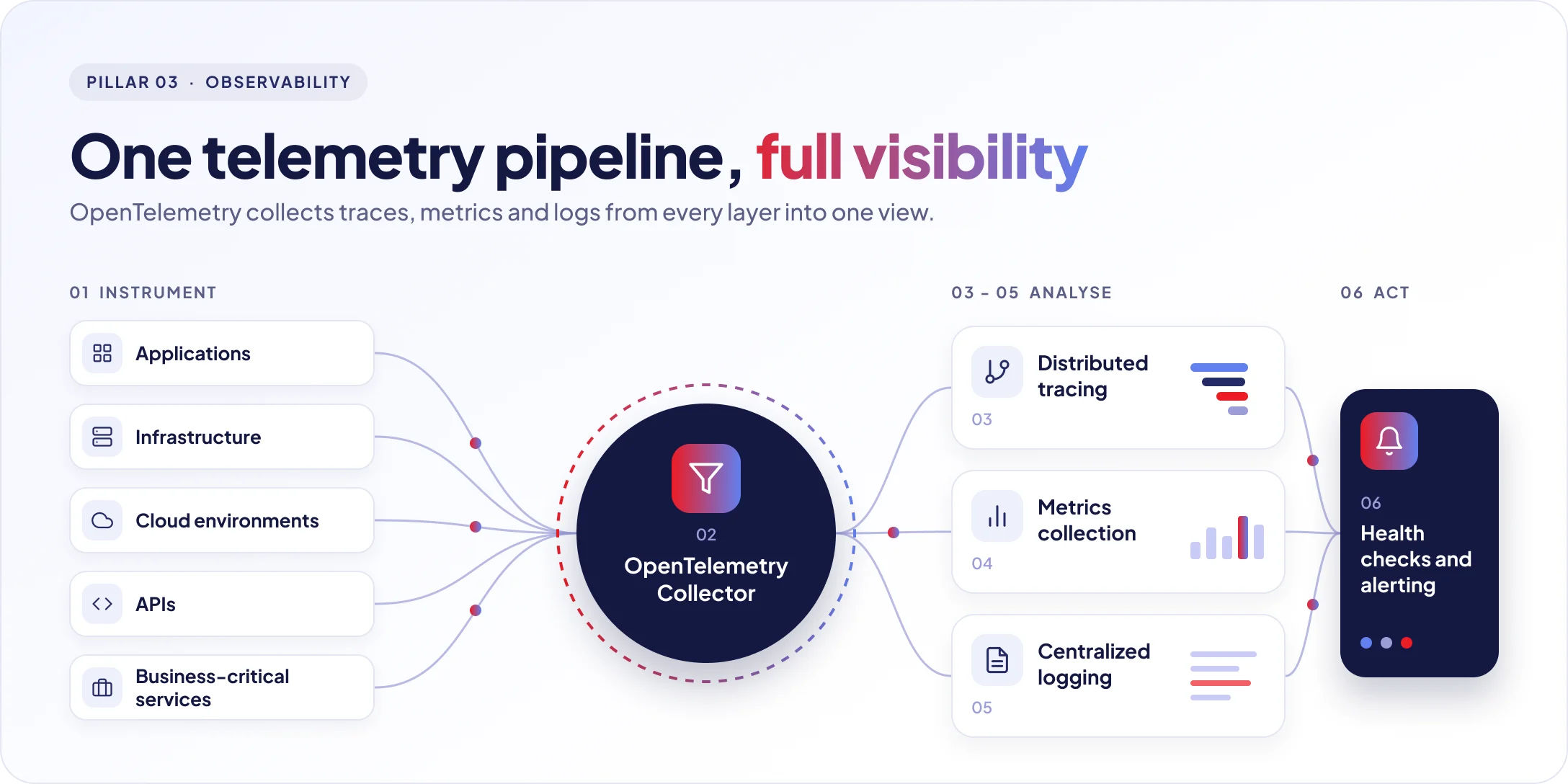
3.

OpenTelemetry & Modern Observability

Create complete visibility across applications, infrastructure, cloud environments, APIs, and business-critical services.

Business Impact

  • Faster incident resolution
  • Reduced downtime
  • Improved service reliability
  • Better operational decision-making

Key Capabilities

  • OpenTelemetry instrumentation
  • Distributed tracing
  • Centralized logging
  • Metrics collection
  • Infrastructure monitoring
  • Application performance monitoring
  • SSL and certificate monitoring
  • Health checks and alerting
OpenTelemetry & Modern Observability diagram
4.

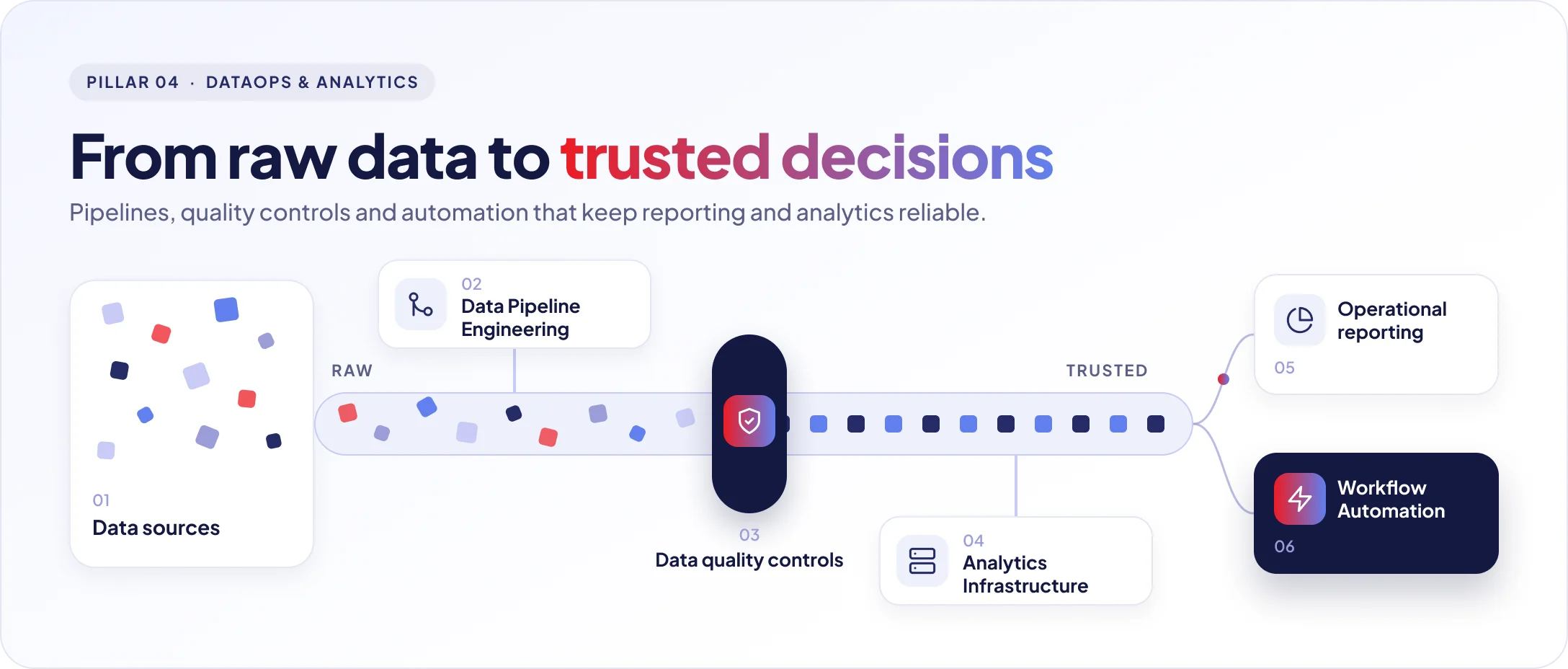
DataOps, Analytics & Workflow Automation

Build trusted data platforms that support reporting, analytics, operational intelligence, and business automation.

Business Impact

  • Faster access to business insights
  • Increased operational efficiency
  • Improved decision quality
  • Better governance of data assets

Key Capabilities

Analytics Infrastructure

  • Modern analytics platforms
  • Operational reporting
  • Data warehouse modernization
  • Real-time analytics

Data Pipeline Engineering

  • ETL / ELT modernization
  • CDC implementations
  • Pipeline monitoring
  • Data quality controls
  • Deployment automation

Workflow Automation

  • Business process automation
  • System integration
  • Event-driven workflows
  • Operational efficiency initiatives
DataOps, Analytics & Workflow Automation diagram
5.

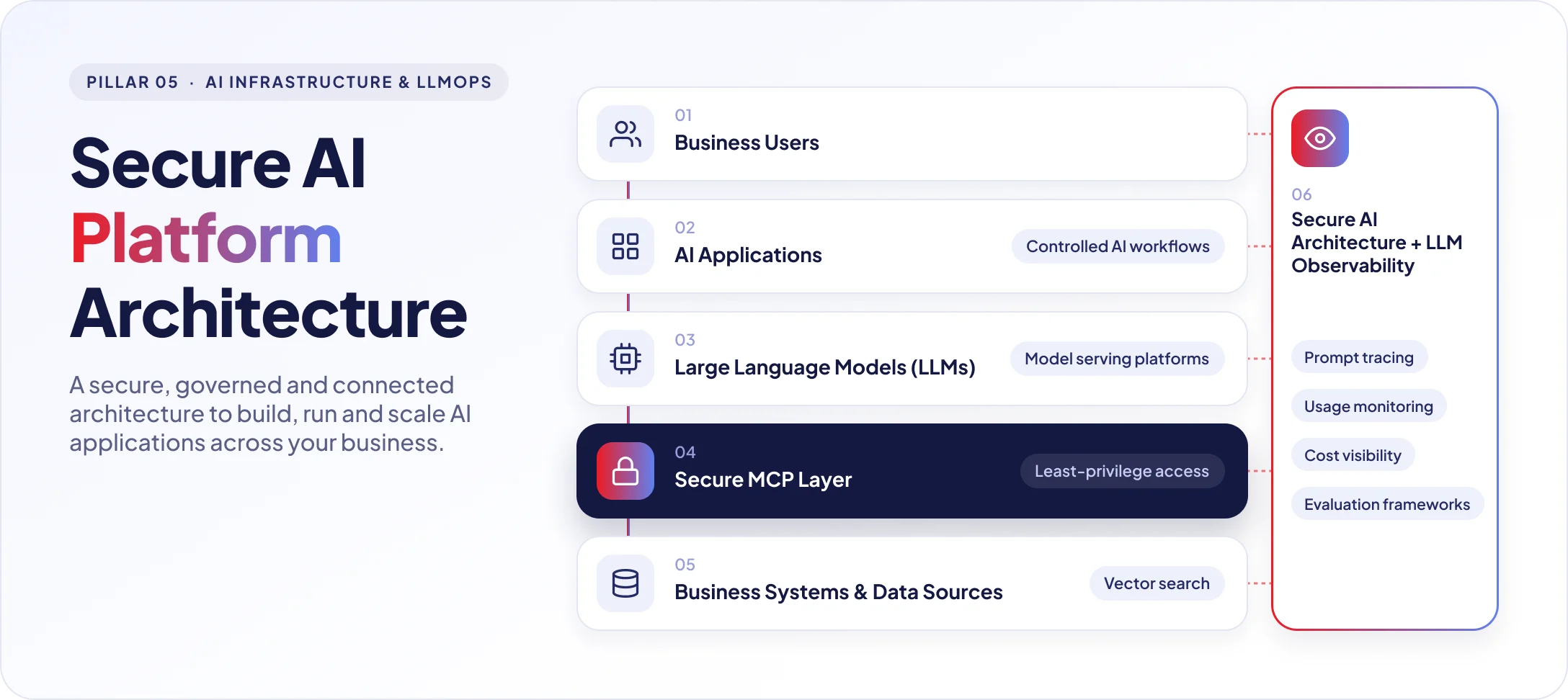
AI Infrastructure, LLMOps & Secure MCP Architecture

Enable AI adoption while maintaining governance, security, operational control, and cost visibility.

Business Impact

  • Reduced AI risk
  • Improved governance
  • Sustainable AI scalability
  • Better visibility into AI operations

Key Capabilities

Secure AI Architecture

  • Authentication and authorization controls
  • Secure MCP integrations
  • Secrets management
  • Least-privilege access models
  • Controlled AI workflows

LLM Observability

  • Prompt tracing
  • Usage monitoring
  • Cost visibility
  • Evaluation frameworks
  • Performance insights

AI Infrastructure

  • Private AI environments
  • Vector search infrastructure
  • Model serving platforms
  • AI operational monitoring
AI Infrastructure, LLMOps & Secure MCP Architecture diagram
6.

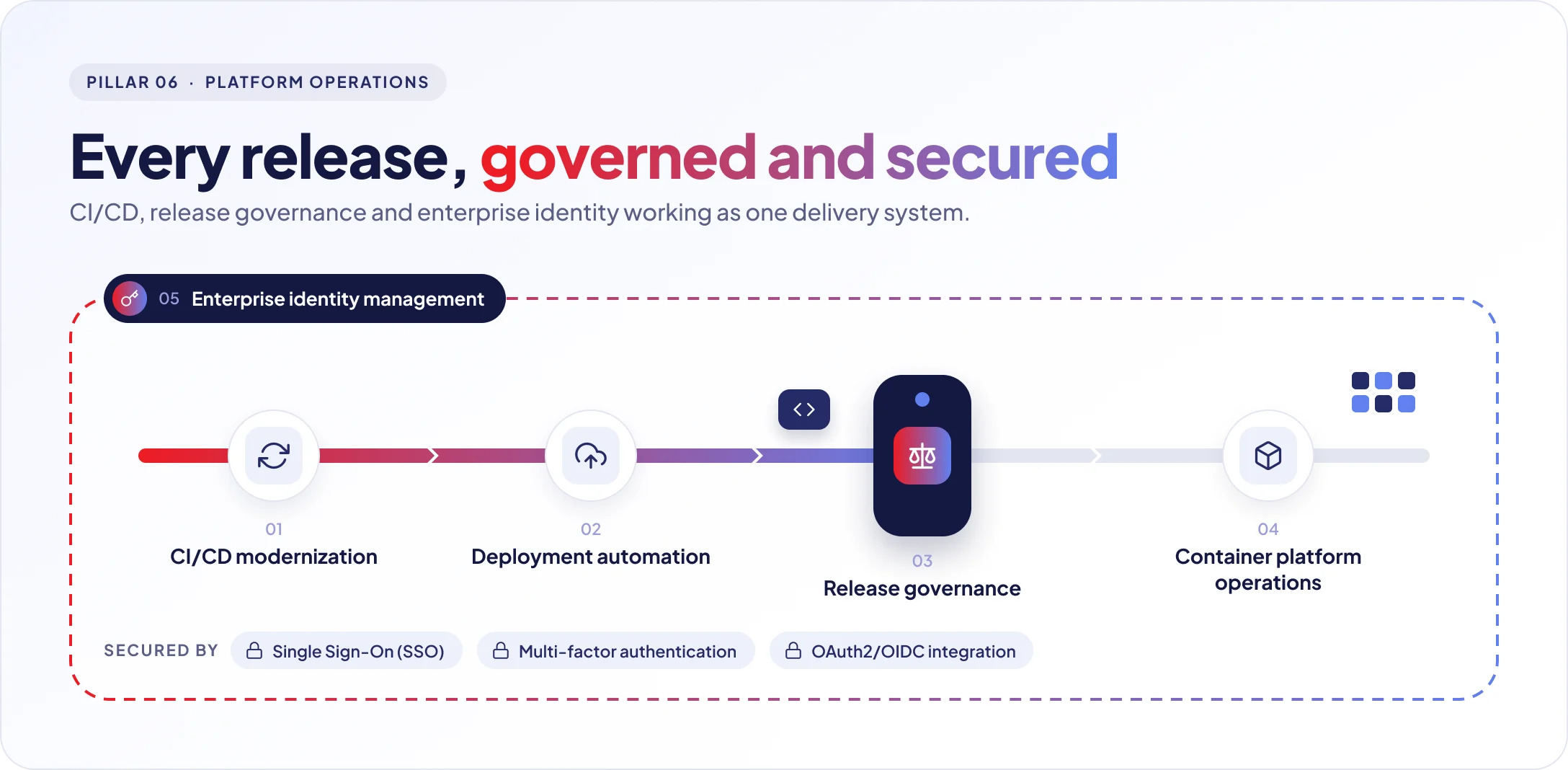
Platform Operations, Delivery Automation & Identity Management

Modernize software delivery through reliable CI/CD, enterprise identity management, and scalable container platforms.

Business Impact

  • Faster time-to-market
  • Greater release confidence
  • Improved engineering productivity
  • Reduced operational overhead

Key Capabilities

  • CI/CD modernization
  • Deployment automation
  • Release governance
  • Enterprise identity management
  • Single Sign-On (SSO)
  • OAuth2/OIDC integration
  • Multi-factor authentication
  • Container platform operations
Platform Operations, Delivery Automation & Identity Management diagram
7.

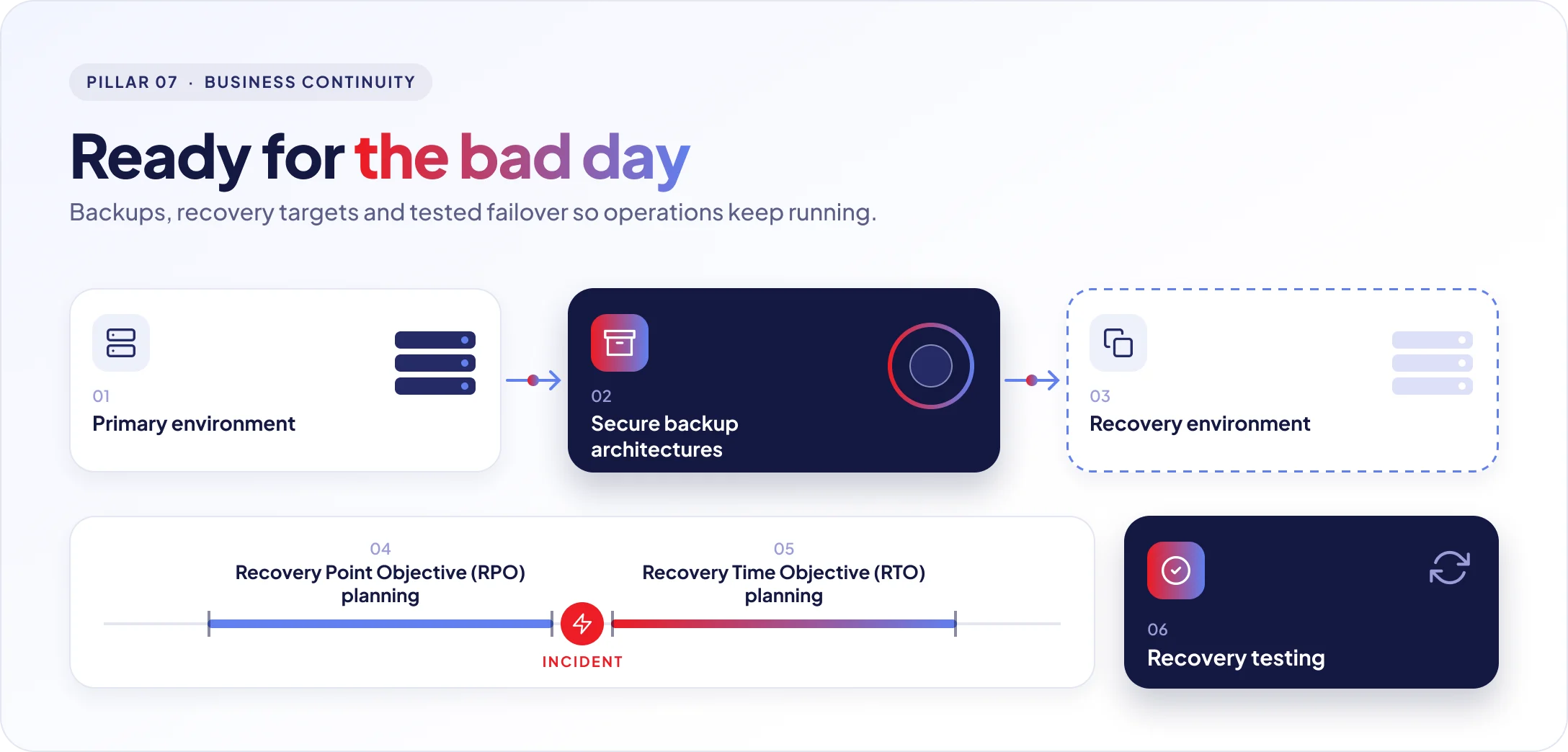
Business Continuity & Resilience Engineering

Strengthen the organization's ability to withstand outages, cyber incidents, operational disruptions, and infrastructure failures.

Business Impact

  • Faster recovery capability
  • Reduced operational risk
  • Improved business continuity
  • Stronger customer trust

Key Capabilities

  • Recovery Point Objective (RPO) planning
  • Recovery Time Objective (RTO) planning
  • Secure backup architectures
  • Disaster recovery planning
  • Recovery testing
  • Resilience assessments
  • Operational continuity planning
Business Continuity & Resilience Engineering diagram

Compliance, Governance & Risk Management

Governance Built Into the Platform, Not Added Before the Audit

  • SOC 2
  • ISO 27001
  • GDPR
  • HIPAA
  • NIST

Organizations rarely struggle with audits because they lack policies. They struggle because the operational controls required for compliance are distributed across multiple teams, disconnected tools, and manual processes.

Successful audits require evidence that security controls are enforced, software delivery processes are governed, access is managed appropriately, systems are monitored continuously, data is protected, business continuity plans are tested, and emerging technologies such as AI operate within established governance frameworks.

At Axxonet, Compliance, Governance & Risk Management acts as the unifying layer across our Platform Engineering Framework, helping organizations transform operational excellence into continuous audit readiness.

By integrating governance across every platform capability, organizations gain the visibility, accountability, and control required to support regulatory requirements, customer security assessments, and industry certifications including SOC 2, ISO 27001, GDPR, HIPAA, and NIST-aligned programs.

By embedding governance, risk management, and compliance across every layer of the platform, Axxonet helps organizations build a secure, resilient, and continuously audit-ready technology foundation that supports both growth and regulatory confidence.

How the Platform Engineering Framework Supports Audit Success

Every pillar of the Axxonet Platform Engineering Framework contributes to a stronger control environment and a more audit-ready organization.

Platform PillarContribution to Audit Readiness
DevSecOps & Security Engineering Secure software delivery, vulnerability management, software supply chain security, remediation governance
Quality Assurance Release governance, testing evidence, change validation, quality controls
OpenTelemetry & Observability Monitoring, audit trails, incident visibility, operational accountability
DataOps & Analytics Data governance, lineage, reporting integrity, data quality management
AI Infrastructure & LLMOps AI governance, usage monitoring, access controls, responsible AI operations
Platform Operations & Identity Management SSO, MFA, privileged access governance, identity lifecycle management
Business Continuity & Resilience Backup validation, disaster recovery testing, continuity planning and recovery readiness

Together, these capabilities create the operational controls, monitoring processes, audit evidence, and governance structures required to demonstrate compliance and reduce risk across the organization.

GRC Capabilities

Governance, Risk & Compliance Capabilities

Unified Governance & Oversight

Establish centralized policies, controls, accountability frameworks, and executive visibility across technology operations.

Continuous Security Oversight

Monitor, assess, and continuously improve security controls across applications, infrastructure, cloud services, and data platforms.

Compliance Program Enablement

Support readiness initiatives for SOC 2, ISO 27001, GDPR, HIPAA, NIST, and customer-specific compliance requirements.

Risk & Control Management

Identify, assess, prioritize, and mitigate technology, security, operational, and compliance risks.

Audit Readiness & Evidence Management

Centralize evidence collection, control documentation, remediation tracking, and audit support processes.

Continuous Assurance

Validate control effectiveness through ongoing monitoring, testing, reporting, governance reviews, and operational assessments.

Compliance Outcomes

Executive Outcomes

Accelerated audit and certification readiness
Reduced compliance effort through centralized evidence and automated controls
Greater visibility into operational, cybersecurity, compliance, and AI-related risks
Stronger governance across engineering, security, data, and resilience initiatives
Increased confidence among customers, auditors, regulators, and stakeholders
A continuously monitored, audit-ready operating model

Industries We Support

Our platform engineering services are particularly valuable for organizations navigating rapid growth, regulatory requirements, complex delivery environments, modernization initiatives, and AI adoption.

Typical Client Profiles

  • SaaS & Software Companies

    SaaS & Software Companies

  • Manufacturing Organizations

    Manufacturing Organizations

  • Logistics & Transportation Companies

    Logistics & Transportation Companies

  • Healthcare Technology Providers

    Healthcare Technology Providers

  • Financial Services Firms

    Financial Services Firms

  • Enterprise IT Teams

    Enterprise IT Teams

  • Digital Product Companies

    Digital Product Companies

  • Field Service Organizations

    Field Service Organizations

Common Business Use Cases

    • SOC 2 Readiness Programs
    • ISO 27001 Readiness Initiatives
    • Platform Consolidation
    • OpenTelemetry Adoption
    • DevSecOps Modernization
    • Cloud Cost Optimization
    • AI Infrastructure Deployment
    • Data Platform Modernization
    • CI/CD Transformation
    • Security Program Enhancement
    • Disaster Recovery Improvement

Open-Source Platform Foundation

Enterprise Capabilities Without Enterprise Licensing Complexity

Capability AreaTechnology Foundation
Identity & SSO
  • Keycloak
Compliance & Governance
  • Eramba
Security Monitoring
  • Wazuh
Observability
  • OpenTelemetry
  • Grafana
  • Loki
  • Prometheus
Vulnerability Management
  • SonarQube
  • DefectDojo
Analytics Platforms
  • ClickHouse
  • DuckDB
Data Engineering
  • Apache Hop
Workflow Automation
  • n8n
Quality Engineering
  • Playwright
  • Apache JMeter
AI Observability
  • Langfuse
Container Platforms
  • Docker Swarm
  • Kubernetes

Final architecture decisions are aligned with workload requirements, operational maturity, compliance obligations, and growth objectives.

Engagement Model

  1. Phase 1: Platform Assessment & Executive Roadmap

    Duration: 2 Weeks

    We evaluate:

    • Platform architecture
    • Security posture
    • Delivery processes
    • Observability maturity
    • Compliance readiness
    • Operational resilience

    Executive Deliverable

    Platform Modernization & Risk Reduction Roadmap

    A prioritized strategic plan aligning technology investments with business objectives.

  2. Phase 2: Foundation Implementation

    Duration: 4-8 Weeks

    Implementation of core platform capabilities across security, observability, compliance, automation, analytics, and delivery operations.

    Executive Deliverable

    Production-Ready Platform Foundation

    A scalable engineering platform aligned with growth objectives.

  3. Phase 3: Fractional Platform Engineering Leadership

    Provide ongoing platform engineering expertise without the cost and complexity of maintaining large specialist teams.

    Ongoing Focus Areas

    • Platform optimization
    • Security operations
    • Compliance support
    • Observability management
    • DataOps operations
    • AI governance
    • Incident response
    • Continuous modernization

Frequently Asked Questions

Schedule a Platform Discovery Session

Platform engineering improves delivery speed, operational reliability, security posture, governance, and developer productivity. It creates the technology foundation required to scale efficiently without increasing complexity at the same rate.

Traditional DevOps engagements usually focus on pipelines and tooling. We take a unified platform engineering approach: delivery, security, observability, compliance, data operations, resilience and AI infrastructure are designed as one coordinated platform. We work open-source-first to reduce vendor lock-in, follow security findings from scan to closure, and build governance into the platform so audit readiness is continuous instead of a last-minute exercise.

Yes. We support readiness initiatives for SOC 2, ISO 27001, GDPR, HIPAA and NIST-aligned programs. Governance runs across every platform pillar, so controls are enforced in delivery pipelines, access is managed, systems are monitored continuously and evidence is collected centrally instead of through spreadsheets and manual processes.

Not necessarily. Every engagement starts with a Platform Assessment of your architecture, security posture, delivery processes, observability maturity, compliance readiness and operational resilience. Recommendations build on what already works, and final architecture decisions are aligned with your workload requirements, operational maturity, compliance obligations and growth objectives.

It can. Consolidating duplicated tooling, automating manual work and using enterprise-grade open-source technologies all reduce long-term operating costs and vendor dependency. Platform consolidation and cloud cost optimization are common starting points. The size of the saving depends on your current environment, which is why it is assessed during the first phase.

We design secure AI infrastructure and MCP-based architectures with governance, observability, security and access controls built in from the start. That covers LLMOps practices, AI usage monitoring, AI observability and responsible AI operations, so AI initiatives can scale without creating new security or compliance gaps.

Success is measured through business outcomes such as:

  • Deployment frequency
  • Lead time for change
  • Platform availability
  • Security remediation time
  • Compliance readiness
  • Recovery success rates
  • Engineering productivity
  • Infrastructure efficiency
  • Operational reliability

Ready to Future-Proof Your Engineering Platform?

Technology leaders are under increasing pressure to deliver software faster, strengthen security, improve compliance, support AI initiatives, and control operating costs simultaneously.

A modern engineering platform makes these objectives achievable.

Schedule a Platform Discovery Session

Assess your current platform maturity. Identify operational risks. Create a roadmap for secure, scalable growth.

Axxonet Platform Engineering

Secure Operations. Faster Delivery. Sustainable Scale.

Shopping Basket

Fill Your Requirements


MicroFocus Vertica Analytics Platform delivers speed, scalability, and built-in machine learning that today’s most analytically intensive workloads demand, whether in the Public Clouds, On-Premises, on Hadoop, or any Hybrid combination. Vertica’s SQL Data Warehouse is trusted by the world’s leading data-driven companies, including Cerner, Etsy, Intuit, Uber and more to deliver speed, scale and reliability on mission-critical analytics. Vertica combines the power of a high-performance, massively parallel processing SQL query engine with advanced analytics and machine learning so you can unlock the true potential of your data with no limits and no compromises. We are a certified System Integration and reseller partner of Vertica and have a strategic alliance to develop industry-specific solutions using this Award-winning Columnar Database in the APAC region.

We have extensive experience with the entire product suite having successfully completed over 50 implementations in the USA/Europe/Asia Pacific across different industries and still continue to support a few key customers Globally.

As a Future-ready and complete, enterprise-grade analytics platform, Pyramid is a compelling option for organizations. Pyramid offers an integrated suite for modern Analytics and Business Intelligence requirements. It has a broad range of analytical capabilities, including data wrangling, ad hoc analysis, interactive visualization, analytic dashboards, mobile capabilities and collaboration in a governed infrastructure. It also features an integrated workflow for system-of-record reporting. Its Augmented features such as Smart Discovery, Smart Reporting, Ask Pyramid (NLQ), AI-driven modelling, automatic visualizations and dynamic content offer powerful insights to all users, regardless of skill level and the adaptive augmented analytics platform covers the entire data life cycle out-of-the-box, from ML-based data preparation to automated insights and automated ML model building. Pyramid is especially useful for the customer who is in urgent need to get more value out of their existing SAP BW and SAP HANA investments. Without any data extraction or duplication, Pyramid offers best-in-class functionality and performance that preserves the security and governance inherent in the SAP platform. We are a Strategic System Integration and Reseller partner of Pyramid Analytics.